The war ended ten years ago, and Odysseus is still not home. The famous monsters are already behind him when the poem begins, and he tells those stories himself, one night, far from home. Back on Ithaca, men have filled his house, eating his food and courting his wife, and Penelope keeps them all waiting.
Tell me about a complicated man.
Muse, tell me how he wandered and was lost
when he had wrecked the holy town of Troy.
doloisin: tricks, wiles, schemes. He introduces himself to strangers by his tricks, before his kingdom.
Book 9, trans. Robert FaglesHomer, in the original
What happens. None of the 600 men make it home. The poem's first listeners already knew that. The story is about how.
Why it matters. The voyage is the price of what happened at Troy. The horse won the war, but it also offended the gods, and the ten years at sea are the bill.
02The Lotus-Eaters
Book 9. an island of forgetting
The crew lands on a friendly island. The locals eat a sweet fruit called the lotus, and offer it to the sailors.
Land of the Lotos Eaters. Robert S. Duncanson, 1861
Any crewmen who ate the lotus, the honey-sweet fruit,
lost all desire to send a message back, much less return.
lotos: the plant of forgetting. Nobody knows which plant Homer meant.
Book 9, trans. Robert FaglesHomer, in the original
What happens. The men who eat the lotus forget home completely and lose all interest in leaving. Odysseus drags them back to the ships crying and ties them under the rowing benches.
Why it matters. The first enemy in the poem isn't a monster. It's forgetting. The witch, the goddess, the song: every danger after this is another version of the same offer to stop wanting to go home.
03Polyphemus
Book 9. a cave, a giant, one eye
Odysseus and twelve men explore a cave. It belongs to a one-eyed giant, who rolls a boulder across the entrance. Nobody can move it but him.
Odysseus in the Cave of Polyphemus. Jacob Jordaens, c. 1635
My name is Nohbdy: mother, father, and friends,
everyone calls me Nohbdy.
Outis: nobody, no one. The pun that saves his life. Fitzgerald spells it Nohbdy to keep the sound of the trick.
Book 9, trans. Robert FitzgeraldHomer, in the original
What happens. The giant eats two men at a time. Odysseus can't kill him, because only the giant can move the boulder. So he gets him drunk, says his name is Nobody, and blinds him with a heated stake. The other giants shout "who is hurting you?" and Polyphemus answers "Nobody." The crew escapes at dawn tied under the sheep.
Why it matters. As they sail away, Odysseus can't resist shouting his real name back at the shore. The giant's father is Poseidon, god of the sea. That boast costs him nine years.
04Circe
Book 10. the year of delay
Half the crew goes to investigate a house in the woods. A woman is singing inside, and the wolves outside act like pets.
Circe Offering the Cup to Ulysses. John William Waterhouse, 1891
You have a mind in you no magic can enchant!
σοὶ δέ τις ἐν στήθεσσιν ἀκήλητος νόος ἐστίν.
akeletos: proof against enchantment. A rare word, used of a rare mind.
Book 10, trans. Robert FaglesHomer, in the original
What happens. She turns the scouts into pigs. Hermes gives Odysseus a herb that blocks her magic, so he drinks her cup and nothing happens. She gives the men back, and they end up staying a year.
Why it matters. The deadliest enemy on the voyage becomes the most useful ally. Circe is the one who tells him the way home runs through the land of the dead.
05The Underworld
Book 11. the dead give directions
Odysseus sails to the edge of the world to ask a dead prophet for directions home. He pours an offering of blood and waits for the ghosts.
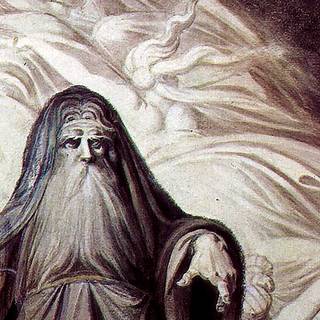
Tiresias Appears to Ulysses During the Sacrifice. Henry Fuseli, c. 1780
It was my longing for you, my shining Odysseus—
you and your quickness, you and your gentle ways—
that tore away my life that had been sweet.
aganophrosyne: gentleness of heart. His mother's word for what she missed enough to die of.
his mother's ghost. Book 11, trans. Robert FaglesHomer, in the original
What happens. Tiresias tells him the way home and gives one warning: leave the cattle of the Sun alone. Then his mother's ghost approaches. She was alive when he left. He tries three times to hold her, and three times she passes through his arms. She died waiting for him.
Why it matters. Remember the cattle. And notice what the trip to the dead is for: it counts what the voyage costs, in people who ran out of time.
06The Sirens
Book 12. a song worth dying for
The ship has to pass the Sirens, whose song makes sailors steer into the rocks. The safe move is wax in everyone's ears. Odysseus wants to hear it.
Ulysses and the Sirens. John William Waterhouse, 1891
Odysseus! Come here! You are well-known
from many stories! Glory of the Greeks!
Now stop your ship and listen to our voices.
kydos: glory, renown. The Sirens' bait is not beauty. It is reputation.
Book 12, trans. Emily WilsonHomer, in the original
What happens. Wax in the crew's ears, and Odysseus tied to the mast, with orders to tie him tighter if he begs. He hears the whole song, and he begs. They row past.
Why it matters. He's the only man to hear the song and live. Not because he resisted the temptation, but because he planned around it. Every adaptation keeps this scene.
07Scylla & Charybdis
Book 12. between a monster and a whirlpool
The route runs through a narrow strait. On one side is a whirlpool that swallows ships. On the other is a monster with six heads. He has to pick one.
Odysseus in Front of Scylla and Charybdis. Henry Fuseli, 1794–96
Better by far to lose six men and keep your ship
than lose your entire crew.
pothemenai: to miss, to mourn for. Circe's arithmetic is written in the verb for grief: better to mourn six than all.
Circe's counsel. Book 12, trans. Robert FaglesHomer, in the original
What happens. He steers close to the monster's cliff. Six heads come down and take six men, and he watches them carried up, calling his name. He calls it the worst thing his eyes ever saw at sea. The whirlpool would have killed everyone.
Why it matters. He knew the price before he chose the route, and he told the crew nothing, because fear would slow the rowing. The poem lets you decide whether that was mercy or theft.
08Calypso
Book 5. seven years on one island
A goddess keeps Odysseus on her island for seven years. She loves him, and she offers him immortality if he stays.
Odysseus and Calypso. Arnold Böcklin, 1883
His eyes were always
tearful; he wept sweet life away, in longing
to go back home.
nostos: the homecoming. The word behind nostalgia, the ache of the return.
Book 5, trans. Emily WilsonHomer, in the original
What happens. He says no. For seven years he sits on the beach and cries, looking at the sea. It takes an order from Zeus, delivered by Hermes, to free him. Calypso, still protesting, helps him build the raft.
Why it matters. The trade on the table: live forever with a goddess, or grow old with a mortal wife on a rocky island. He picks the thing that ends. That choice is the poem's whole argument about being human.
09Ithaca
Books 13–23. home, but not yet
Twenty years after leaving, Odysseus is back on Ithaca, disguised as a beggar. Nobody recognizes him except his old dog.
The Return of Odysseus. Pinturicchio, 1508–09
There is our pact and pledge, our secret sign,
built into that bed—my handiwork and no one else's!
sema: a sign, a token. Recognition in this poem always runs on signs, and the bed is the last one.
Book 23, trans. Robert FaglesHomer, in the original
What happens. He watches the suitors from inside his own house, taking their insults. Penelope announces a contest: she will marry whoever can string the king's old bow. All 108 try and fail. Then the beggar asks for a turn.
Why it matters. The doors are locked from the inside, and what follows is not a fight. But the poem ends quieter than that. Penelope tests the stranger with a lie about their bed, one that only the man who built it would catch. He catches it.
CHARACTERS.
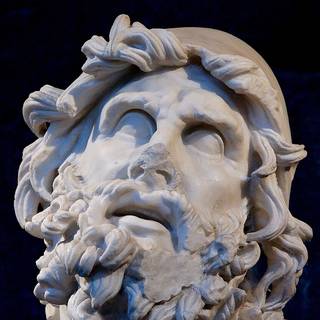
OdysseusὈδυσσεύςking of Ithaca, "the man of twists and turns." A soldier and a king, famous for being clever. He has been away from home for twenty years.Head of Odysseus, the Sperlonga sculptures, 1st century
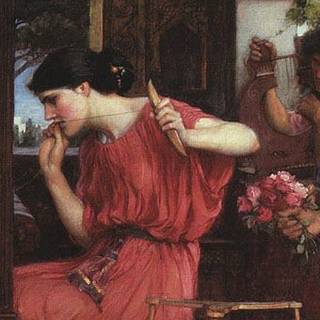
PenelopeΠηνελόπειαhis queen. His wife. She has been waiting for twenty years, and she is just as clever as he is.Penelope and the Suitors (detail), J. W. Waterhouse, 1912
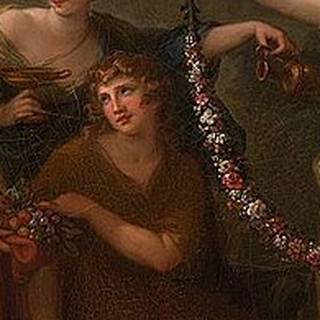
TelemachusΤηλέμαχοςthe son. Their son. He was a baby when his father left, and has never met him.Telemachus and the Nymphs of Calypso (detail), Angelica Kauffman, 1782
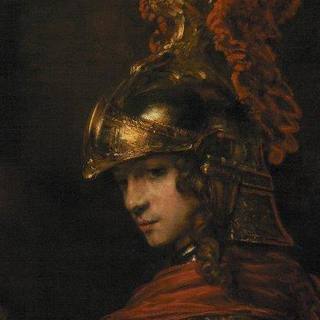
AthenaἈθήνηgoddess of wisdom. Goddess of wisdom. Odysseus is her favourite mortal.Pallas Athena (detail), Rembrandt, c. 1655
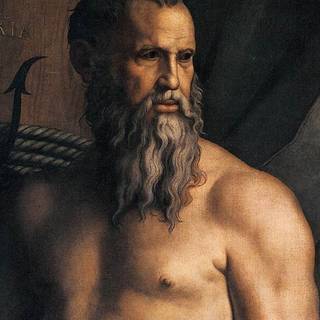
PoseidonΠοσειδῶνgod of the sea. God of the sea. The way home is across his territory.Andrea Doria as Neptune (detail), Bronzino, c. 1545
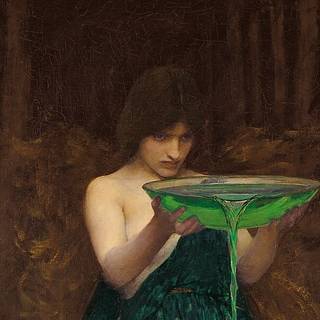
CirceΚίρκηenchantress. A witch who lives alone on an island.Circe Invidiosa (detail), J. W. Waterhouse, 1892
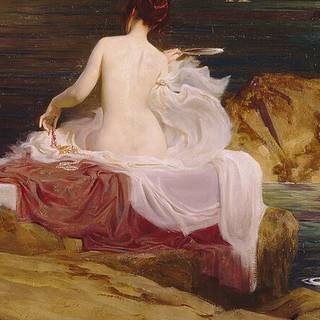
CalypsoΚαλυψώa goddess. A goddess who lives alone on a remote island.Calypso's Isle (detail), Herbert James Draper, 1897
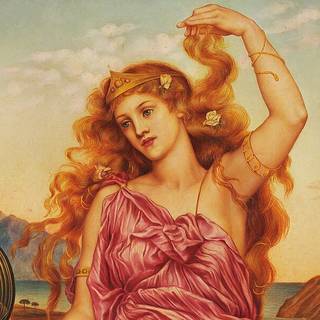
HelenἙλένηof Troy. the reason for all of it. The most beautiful woman in the world. The war at Troy was fought over her.Helen of Troy (detail), Evelyn De Morgan, 1898
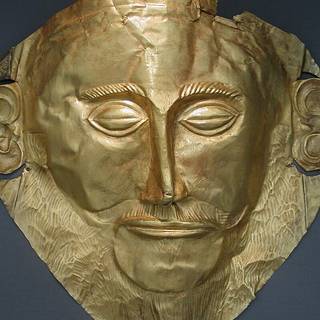
AgamemnonἈγαμέμνωνcommander at Troy. Commander of the Greek armies at Troy. Also sailing home.the "Mask of Agamemnon", Mycenae, c. 1550 BC · photo DieBuche, CC BY-SA
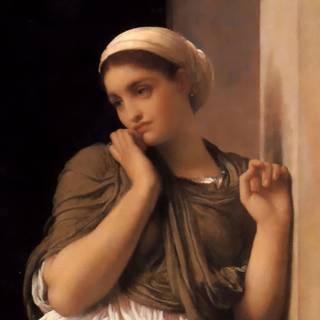
NausicaaΝαυσικάαprincess of the Phaeacians. A young princess of the Phaeacians, an island people known for their ships.Nausicaa (detail), Frederic Leighton, 1878
TiresiasΤειρεσίαςprophet of Thebes, dead. The most famous prophet in Greece. He has been dead a long time.Tiresias Appears to Ulysses (detail), Henry Fuseli, c. 1780
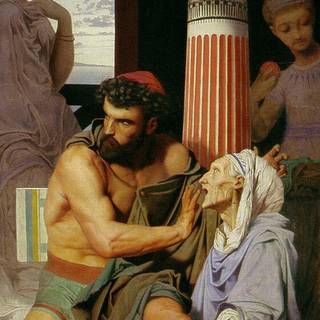
EurycleiaΕὐρύκλειαthe old nurse. The old nurse of the household. She has served the family since Odysseus was a baby.Odysseus and Eurycleia (detail), Gustave Boulanger, 1849
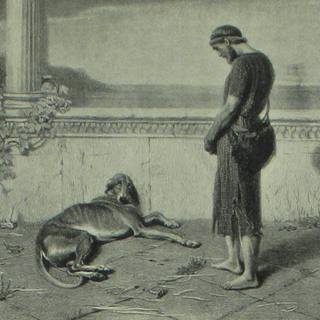
ArgosἌργοςthe dog. Odysseus' dog. He was a puppy when his master left.Ulysses and Argo, book illustration, 1905
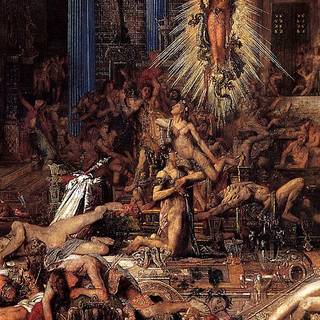
The suitorsοἱ μνηστῆρες108 uninvited guests. Young nobles who have moved into the palace and want Penelope to choose a new husband.The Suitors (detail), Gustave Moreau, 1852–53