The war is in its tenth year and going nowhere. The poem covers a few weeks of it, and it begins not with the enemy but with a quarrel inside the Greek camp: the king insults the best fighter, and the best fighter refuses to fight. Everything else follows from that.
Rage: Sing, Goddess, Achilles' rage,
Black and murderous, that cost the Greeks
Incalculable pain.
menis: wrath. The Iliad's first word, reserved almost entirely for gods, and for Achilles.
Book 1, trans. Stanley LombardoHomer, in the original
ARC.
reveal://
01The Quarrel
Book 1. the war within the war
Nine years into the siege, Agamemnon takes Briseis, a captive woman, away from Achilles in front of the whole army. Achilles stops fighting.
Eurybates and Talthybios Lead Briseis to Agamemnon. Giovanni Battista Tiepolo, c. 1757
and the will of Zeus was moving toward its end.
Διὸς δ᾽ ἐτελείετο βουλή.
boule: will, plan. The poem announces in its fifth line whose plan the war really is.
Book 1, trans. Robert FaglesHomer, in the original
What happens. Achilles reaches for his sword to kill the king, and Athena stops him, visible to him alone. He hands over the woman, walks back to his ships, and swears the Greeks will beg for him before the end. His mother, a goddess, asks Zeus to make it true.
Why it matters. The subject of the poem is not the war. It is this grudge. The question it asks sounds small and is not: what is a man's honor worth, and who gets to set the price?
02The Duel
Book 3. the war in miniature
Paris, who started the war, offers to end it in single combat with Menelaus, the husband he wronged. Helen watches from the wall.
Helen of Troy. Frederic Leighton, c. 1865
Terrible is the likeness of her face to immortal goddesses.
αἰνῶς ἀθανάτῃσι θεῇς εἰς ὦπα ἔοικεν.
ainos: terribly, uncannily. The old men look at Helen and reach for a word that belongs to fear.
the old men of Troy. Book 3, trans. Richmond LattimoreHomer, in the original
What happens. Menelaus wins the duel, and the war should be over. Aphrodite snatches Paris off the field in a mist and sets him down in his own bedroom. Then a Trojan arrow breaks the truce.
Why it matters. Homer answers the question everyone asks, how could a war be worth one woman, by showing her face through the eyes of old men who have lost their sons, and letting them say that it was.
03Hector and Andromache
Book 6. the wall
Hector comes back into the city and finds his wife and baby son at the wall. It is the only quiet scene in the poem.
Farewell of Hector and Andromache. Anton Losenko, 1773
Hektor, thus you are father to me, and my honoured mother,
you are my brother, and you it is who are my young husband.
She lists everyone the war has already taken from her. He is all of them now.
Andromache. Book 6, trans. Richmond LattimoreHomer, in the original
What happens. The baby screams at his father's helmet, and both parents laugh. Hector takes it off, prays that his son will grow up better than him, and goes back to the fighting anyway.
Why it matters. The poem shows you exactly what the war will destroy before it destroys it. Every reader for three thousand years has wanted Hector to stay on the wall.
04The Embassy
Book 9. the offer
The Greeks are losing badly. Agamemnon sends three envoys to Achilles' tent with an enormous apology: treasure, cities, a royal marriage, everything except the words I was wrong.
Achilles Receiving the Ambassadors of Agamemnon. Jean-Auguste-Dominique Ingres, 1801
my return home is gone, but my glory shall be everlasting
ὤλετο μέν μοι νόστος, ἀτὰρ κλέος ἄφθιτον ἔσται
kleos aphthiton: fame that does not decay. A formula older than Homer; ancient Sanskrit poetry has its exact twin.
Book 9, trans. Richmond LattimoreHomer, in the original
What happens. They find him playing the lyre, singing about heroes. He feeds his guests, refuses everything, and explains: his mother has told him his two fates. Stay and die young with everlasting glory, or go home and live long as nobody. Tonight, he says, he sails home.
Why it matters. The poem's hero looks straight at the deal every hero is supposed to accept, glory for life, and says no. That he stays anyway, for a completely different reason, is the tragedy.
05Fire at the Ships
Books 12–15. the tide turns
With Achilles out, Hector breaks through the Greek wall and pushes the whole army back to the beach. The ships, the only way home, are about to burn.
Polydamas Advising Hector at the Trench. John Flaxman, 1793
One bird sign is best: to fight in defence of our country.
εἷς οἰωνὸς ἄριστος ἀμύνεσθαι περὶ πάτρης.
patre: fatherland. An omen has just been read against Troy. This is Hector's answer to prophecy.
Hector. Book 12, trans. Richmond LattimoreHomer, in the original
What happens. Zeus is keeping his promise to Thetis: the Greeks lose until they miss Achilles. The Greek kings are carried off wounded one by one. Hector reaches the first ship and calls for fire.
Why it matters. Homer makes you watch the disaster arrive in slow motion, and makes it the direct product of one man's wounded pride. That is the point.
06Patroclus
Book 16. the borrowed armor
Achilles still will not fight. His closest friend Patroclus, in tears at what is happening, asks to borrow the famous armor and lead the men out himself.
Achilles Lamenting the Death of Patroclus. Gavin Hamilton, c. 1760
Pitiless: the rider Peleus was never your father
nor Thetis was your mother, but it was the grey sea that bore you
and the towering rocks, so sheer the heart in you is turned from us.
neles: without pity. The gentlest man in the poem, describing his best friend.
Patroclus to Achilles. Book 16, trans. Richmond LattimoreHomer, in the original
What happens. Achilles says yes, with one condition: drive them back from the ships and come straight back. In the armor, Patroclus is unstoppable, and does not stop. At the walls of Troy a god strikes him dazed, a spear finds his back, and Hector finishes it and takes the armor.
Why it matters. Every warning in the poem converges here. Patroclus dies wearing another man's glory, and the grief this creates is larger than anything honor was ever worth.
07The Shield
Books 18–19. grief, and new armor
The news reaches Achilles. His cry brings his mother up from the sea. The quarrel with Agamemnon is suddenly nothing.
Thetis Receiving the Weapons of Achilles. Anthony van Dyck, c. 1630
I must die soon, then; since I was not to stand by my companion
when he was killed.
tethnaien: let me be dead. Greek grammar keeps a mood for wishes, and this is it, spent on dying.
Book 18, trans. Richmond LattimoreHomer, in the original
What happens. Thetis has the smith-god Hephaestus forge new armor overnight: a shield carrying the whole world, cities at peace and at war, weddings, harvests, dancing. Achilles reconciles with Agamemnon in a few flat sentences. The gifts no longer matter to him at all.
Why it matters. On the eve of the poem's killing, Homer spends a hundred and thirty lines engraving ordinary life, the thing Achilles is giving up, onto the very shield he will carry out.
08Achilles and Hector
Book 22. the duel
Every Trojan is inside the walls except one. Hector stands at the gate and waits for Achilles, while his mother and father beg from the ramparts.
Achilles Slays Hector. Peter Paul Rubens, c. 1630
There are no binding oaths between men and lions.
ὡς οὐκ ἔστι λέουσι καὶ ἀνδράσιν ὅρκια πιστά.
horkia: oaths, the sworn terms even enemies keep. Achilles is announcing that he has left the human world.
Achilles. Book 22, trans. Robert FaglesHomer, in the original
What happens. Hector's nerve breaks and he runs. Achilles chases him three times around the city, and Athena tricks Hector into standing. Dying, he asks that his body be given back. Achilles refuses, lashes the body to his chariot, and drags it to the ships in sight of the family.
Why it matters. The climax is not a triumph and does not pretend to be. While it happens, Andromache is at home heating a bath for a husband who is already dead. Homer cuts to her deliberately. Killing Hector fixes nothing, and Achilles knows it better than anyone.
09Priam and Achilles
Book 24. the ransom
For days Achilles drags the body at dawn and cannot sleep. The gods have had enough. An old man loads a wagon with treasure and drives into the enemy camp at night.
Priam Pleading with Achilles for the Body of Hector. Gavin Hamilton, 1775
I have endured what no one on earth has ever done before—
I put to my lips the hands of the man who killed my son.
etlen: I brought myself to it. One verb for the bravest act in the poem, done by an old man, unarmed.
Priam. Book 24, trans. Robert FaglesHomer, in the original
What happens. Hermes walks the old king invisibly through the guards. Priam kneels, kisses Achilles' hands, and asks him to think of his own father. They weep together, one for his son, one for his friend and his father, and then they share a meal. Achilles returns the body and grants Troy eleven days for the funeral.
Why it matters. The war poem ends with no battle: two enemies eating together, admiring each other, each knowing how his own story ends. The last line of the Iliad belongs to Hector's funeral. That is the whole argument: what the rage cost, and what it took to lay it down.
CHARACTERS.
AchillesἈχιλλεύςthe best of the Greeks. The greatest fighter alive, and he knows it. Son of a goddess and a mortal king.The Wrath of Achilles (detail), François-Léon Benouville, 1847
PatroclusΠάτροκλοςhis closest friend. They grew up together. The gentler of the two, and the one everybody likes.Patroclus (detail), Jacques-Louis David, 1780
HectorἝκτωρprince of Troy. Commander of Troy's defense. A husband and a father, fighting a war his brother started.Farewell of Hector and Andromache (detail), Anton Losenko, 1773
AndromacheἈνδρομάχηhis wife. Her father and brothers are already gone. Everything she has left is inside the walls.Farewell of Hector and Andromache (detail), Anton Losenko, 1773
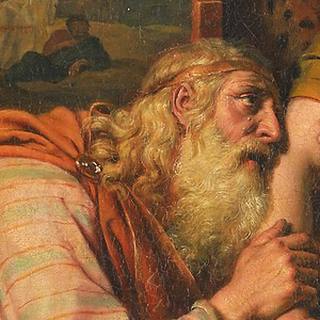
PriamΠρίαμοςking of Troy. Old and courteous, with fifty sons and a war at his gate.Priam Asking Achilles to Return Hector's Body (detail), Alexander Ivanov, 1824
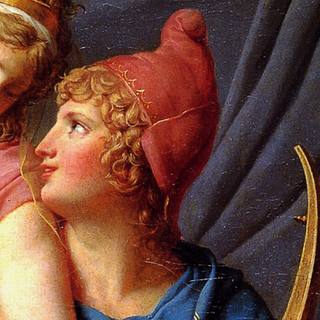
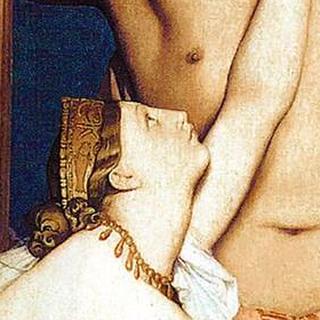
ParisΠάριςprince of Troy. He brought another man's wife home. The war followed.The Loves of Paris and Helen (detail), Jacques-Louis David, 1788
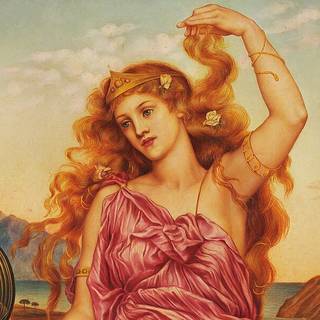
HelenἙλένηof Sparta, then of Troy. The most beautiful woman in the world. The war is fought over her.Helen of Troy (detail), Evelyn De Morgan, 1898
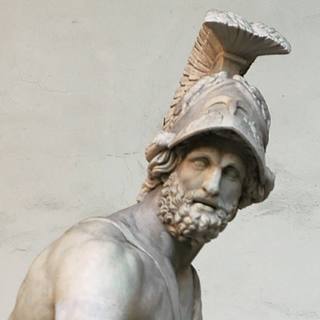
MenelausΜενέλαοςking of Sparta. Helen's husband. The wronged man of the war.Menelaus Supporting the Body of Patroclus, Roman marble, Florence · photo Jastrow, CC BY
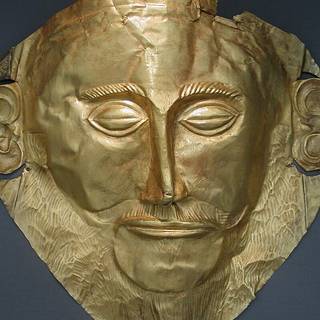
AgamemnonἈγαμέμνωνhis brother, commander of the Greeks. The most powerful king in Greece, and touchy about it.the "Mask of Agamemnon", Mycenae, c. 1550 BC · photo DieBuche, CC BY-SA
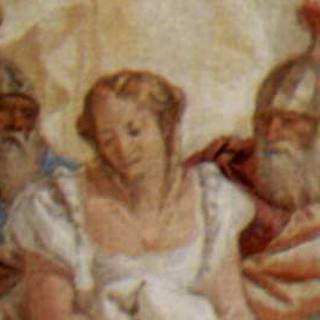
BriseisΒρισηΐςa captive. Taken in a raid and given to Achilles. The argument over her starts the poem.Briseis Led to Agamemnon (detail), Giovanni Battista Tiepolo, c. 1757
ThetisΘέτιςa sea goddess, Achilles' mother. A goddess with a mortal son. She can get Zeus to listen.Jupiter and Thetis (detail), Ingres, 1811 · photo Finoskov, CC BY-SA
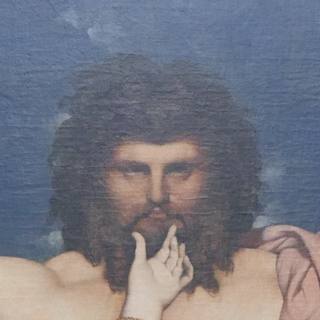
ZeusΖεύςking of the gods. Trying to stay neutral, and failing.Jupiter and Thetis (detail), Ingres, 1811 · photo Finoskov, CC BY-SA